

Postcards from Bosnia is an audio journey into the heart of Bosnia and Herzegovina, seen through the eyes of an Englishman who has made this place his home.
Paid members get access to everything I create, including exclusive podcasts, behind-the-scenes reflections, photo essays, and more that I only share with my inner circle ☕✨
Thanks so much in advance.
Let me say this upfront
I’m not a Christian.
I don’t belong to a church, I don’t follow doctrine, and I wouldn’t describe myself as religious in the traditional sense. If I’m honest, I’m a wayward, wannabe Buddhist, drawn to quiet reflection, to the idea of paying attention, but without the discipline to do it properly.
So what follows isn’t theology.
It’s observation.
Because when you live in Bosnia and Herzegovina long enough, Christmas has a habit of showing up whether you believe in it or not. And here, rather wonderfully, it shows up twice.
The Christmas most British people recognise
For most of my life, Christmas meant one thing.
The 25th of December.
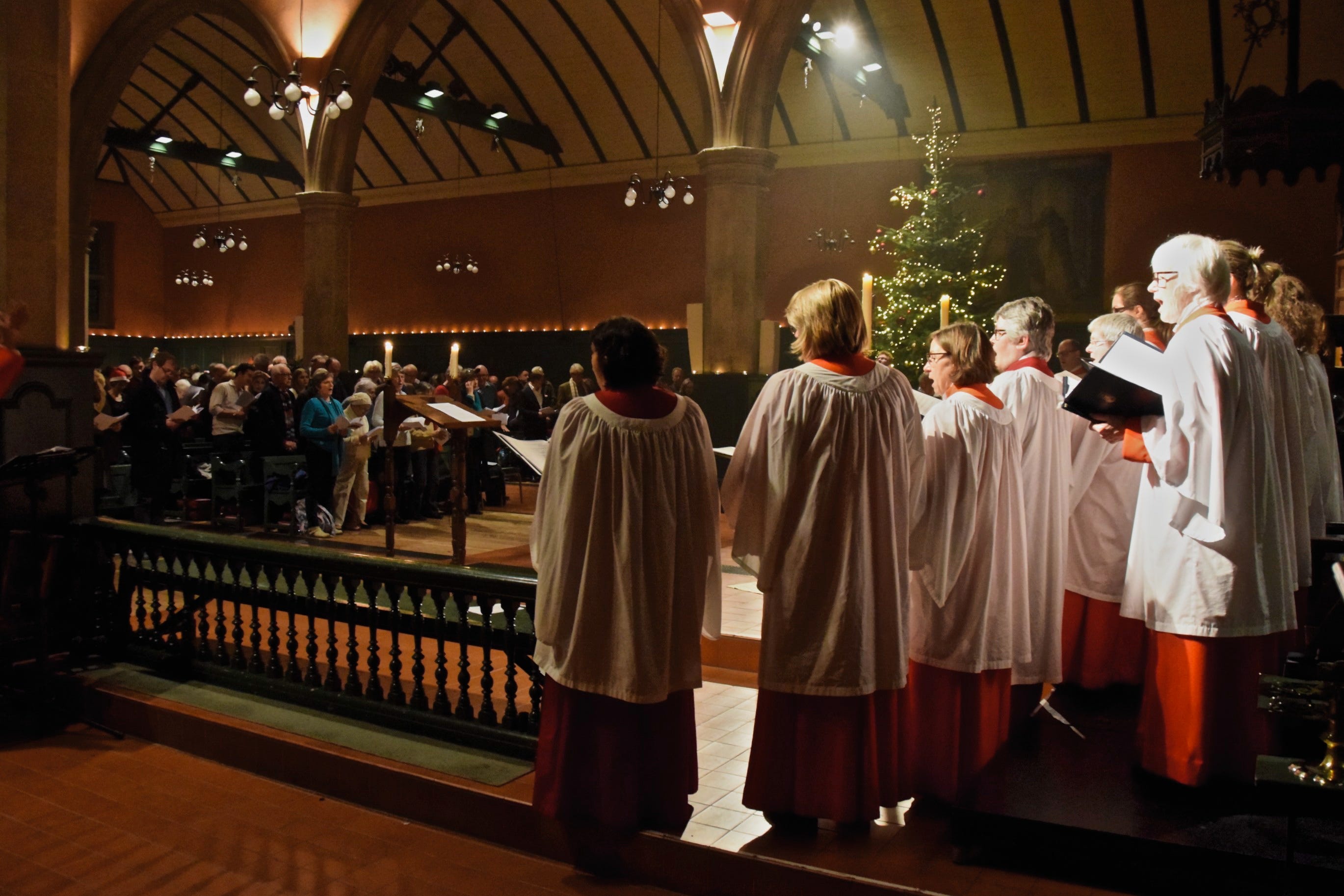
A tree in the corner of the room.
Carols you could sing even if you hadn’t sung them for years.
And far, far too much food.
That was Christmas. End of story.
The Christmas most British people grew up with, Anglican in shape, even if not always in conviction, is open and outward-facing. It fits neatly into national life. Advent drifts past, lights go up, music appears everywhere, and churches fill with people who don’t normally go.
And nobody minds. That’s part of the deal.
You don’t need strong belief to take part. You just need to turn up.
Carols do a lot of the work, familiar words, familiar tunes, and at home, restraint is not the goal. Abundance is.
From the perspective of someone who doesn’t believe, it feels welcoming. Inclusive. Almost forgiving. Christmas as a shared cultural moment rather than a test of faith.
The Christmas that arrives quietly here
Orthodox Christmas feels very different.
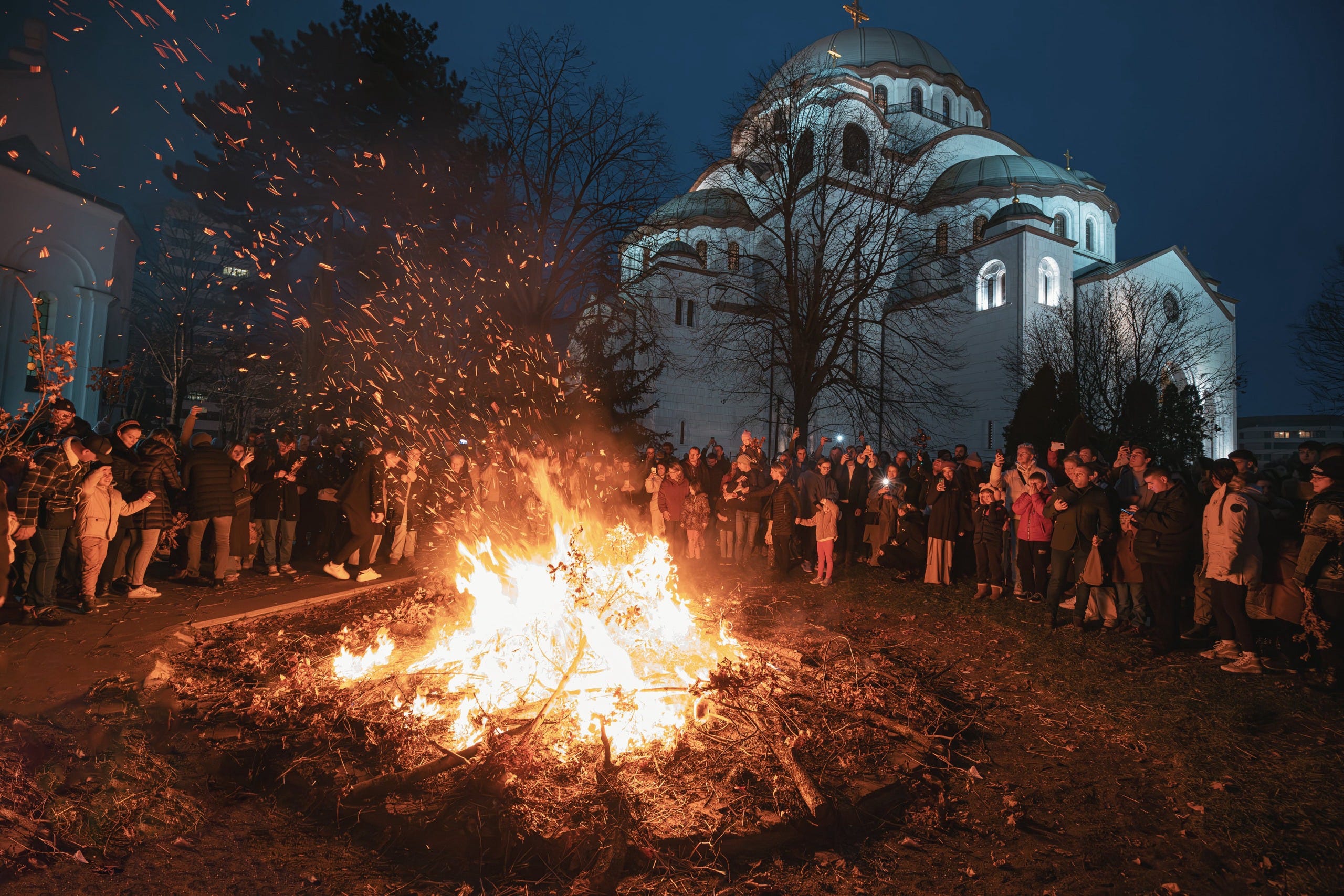
I live in a Serbian Orthodox village in northern Bosnia, and Christmas here arrives on the 7th of January, following the older Julian calendar, long after Britain has packed Christmas away and January has started to bite.
Here, Christmas begins with waiting.
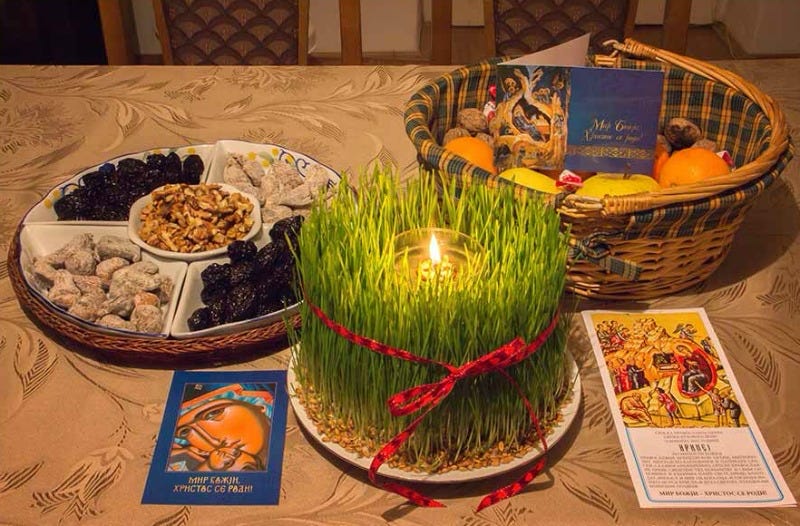
There’s a 40-day fast leading up to it. Christmas Eve “Badnji dan” is quiet, symbolic, and deliberate. The food is simple. The mood restrained.
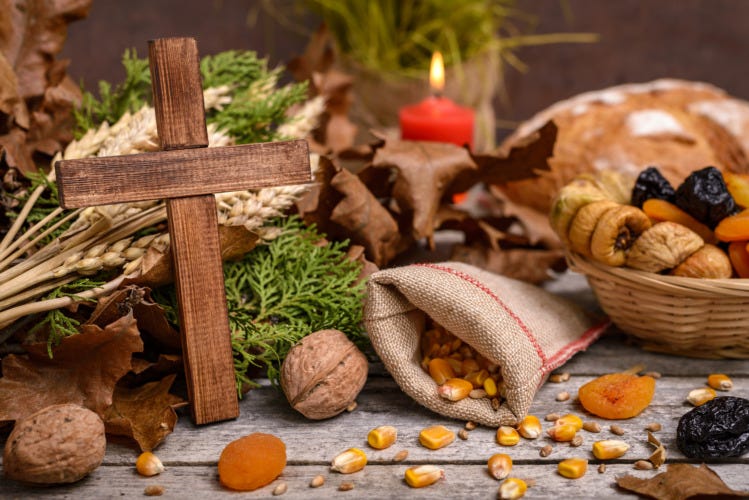
Instead of glitter, there’s straw under the table, a reminder of the stable.
Instead of a Christmas tree, there’s an oak branch, the “Badnjak”, burned or placed in the home.
Church services are darker. There’s more chanting than singing, less explanation, fewer words. Nobody is trying to make it accessible or attractive.
And oddly enough, this is where my Buddhist leanings quietly kick in.
Ritual over persuasion
What strikes me most about Orthodox Christmas is its emphasis on ritual over words, on practice over persuasion.
No one is trying to convince you of anything.
No one is selling belief.
You either show up… or you don’t.
Even as a wannabe Buddhist who doesn’t practise nearly enough ritual himself, I recognise something familiar here. A respect for repetition. For silence. For doing, rather than explaining.
It’s not inclusive in the modern sense, but it is deeply rooted.
Breaking the fast
When Christmas Day finally arrives, the fast is broken.
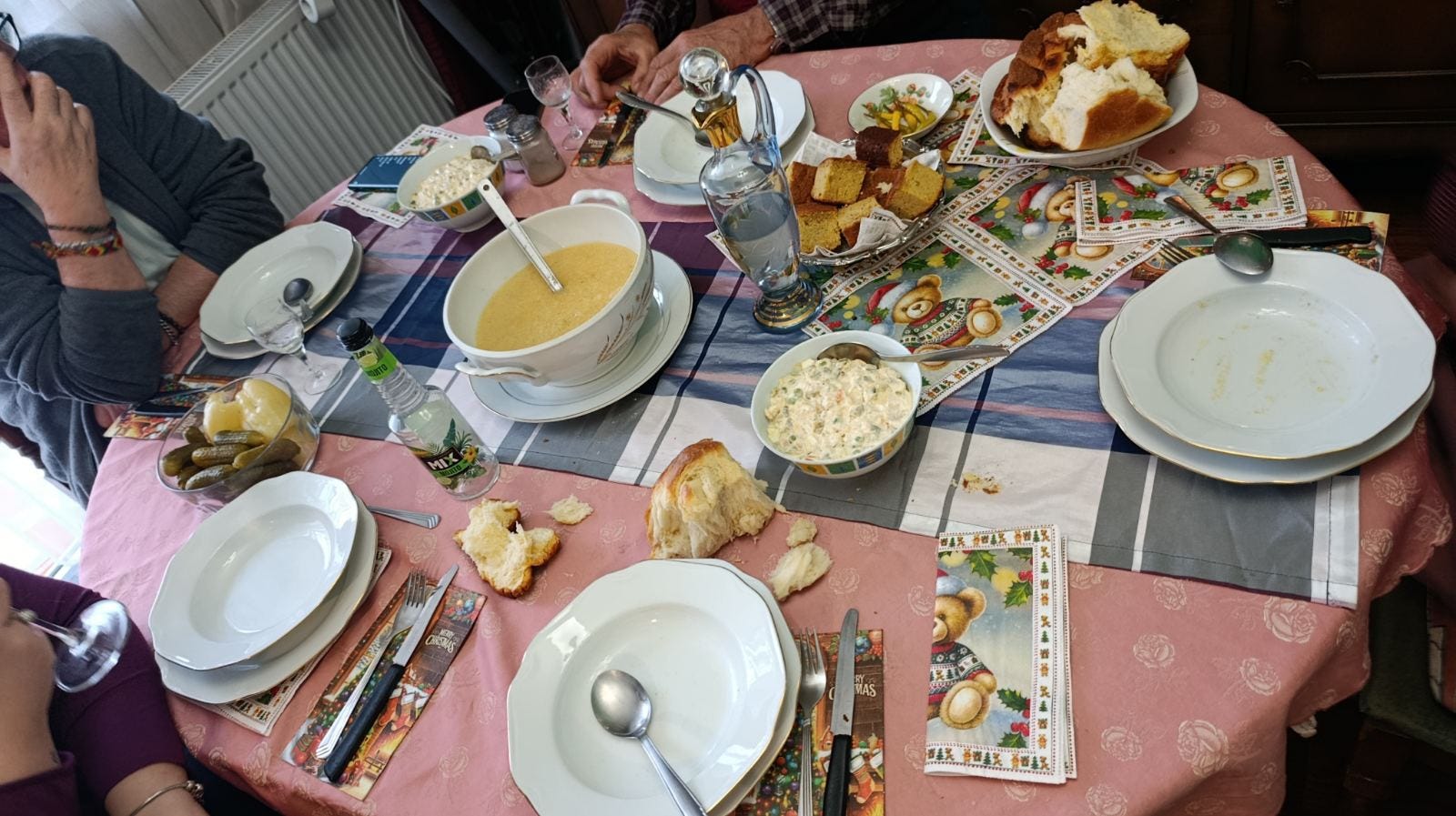
The table fills. The mood lifts. A special bread, česnica, is shared, with a coin hidden inside. Whoever finds it is said to have good fortune in the year ahead.
This year, Tamara found the coin, so fingers crossed we’re in for a good 2026.
But the real point isn’t the coin.
It’s who you’re sitting next to when the bread is broken.
The greeting says everything:
Christ is born.
Truly He is born.
They do say “Happy Christmas” as well, but there are no slogans. No cheerleading. Just statement.
Same story, different energy
Living between these two Christmases has taught me something.
Anglican and Catholic Christmas tends to radiate outward.
Orthodox Christmas draws inward.
One celebrates openly.
The other prepares quietly.
Neither is better. Neither is more authentic. They are simply different ways of holding the same story.
And perhaps because I don’t fully belong to either, I get to appreciate both more clearly.
Living comfortably in between
These days, I mark both Christmases. Lightly and respectfully.
One reminds me where I come from.
The other reminds me where I now live.
And somewhere between carols and crackling oak wood, between abundance and restraint, I’ve learned something useful, even as a non-believer.
Meaning doesn’t always need belief.
Sometimes it just needs attention.
Even from a wayward, wannabe Buddhist.
Thank You
Thank you for listening to these little slices of my life. If you’d like to get more stories, you can subscribe to my Substack, it’s free, and if you ever want to upgrade to paid but can’t afford it, just email me. I’ll sort it out, no questions asked.
Here are 3 questions I have.
What would make you hit “play” on an audio post instead of just reading?
What makes a podcast episode feel personal or meaningful to you?
Would you like me to add audio versions of my blog posts so you can choose how to enjoy them?
I’ll give a complimentary subscription to Coffee and Rakija for life for taking the time to answer.


