
A Story about Lepinja
Bosnia’s Humble Bread With Many Variations

Hello, I’m David, a storyteller, wanderer, and long-time “in-betweener” living a slower, more thoughtful life here in the heart of the Balkans.
Free subscribers can enjoy regular posts about life in Bosnia and Herzegovina, slices of local culture, stories that I come across, and the little everyday moments that make this place so special.
Curious to go deeper? Paid members get access to everything I create, including exclusive podcasts, behind-the-scenes reflections, photo essays, and more that I only share with my inner circle.
Fancy joining me? Click subscribe and let’s explore this unique corner of the world together, one Coffee and Rakija at a time. ☕
If you’ve spent any time in Bosnia and Herzegovina, or if you’ve ever found yourself standing in line at a ćevabdžinica, hypnotised by the smell of grilled meat, then you’ve already met the mighty lepinja. It’s one of those everyday foods that quietly carries the identity of a place. Here in the Krajina, in all corners of the country really, lepinje are not just bread. They’re a kind of cultural shorthand. A little edible heritage.


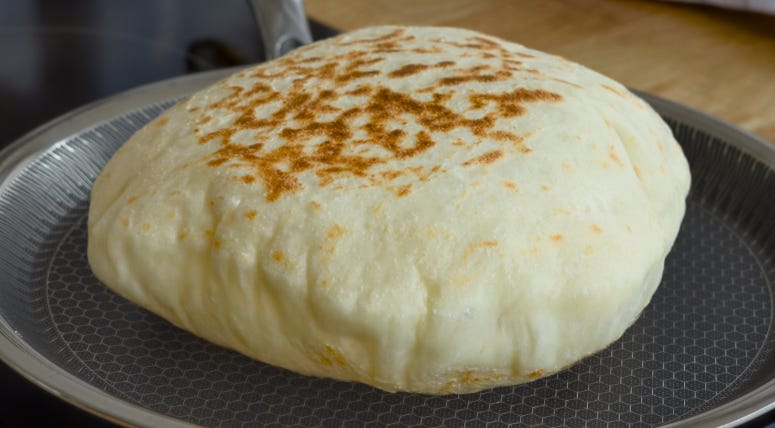
Recently, after more than two decades of living in this patch of rural Bosnia, Tamara surprised me by making something I’d never actually seen in our kitchen before: balloon lepinje. Same ingredients, same humble dough… but baked hotter and faster so they puff up into golden domes that look as if they’re about to float off the baking tray.
Feather-light. Hollow inside. And when you press the top gently, it’s like pushing into a warm cloud.
The response to my short Substack note about it was lovely, including one comment from someone who spotted lepinja for the first time in Aldi in Budapest. Which, to be fair, is a wonderfully 21st-century way to meet Balkan bread.
And that’s the thing: lepinja comes in many shapes, thicknesses, and regional personalities. So I thought I’d put together a friendly guide for anyone curious about what’s what when it comes to this very Bosnian “bread”?

So… what exactly is lepinja?
At its core, lepinja is a simple wheat-flour flatbread. No frills, no fuss. Just flour, water, yeast, and salt, the kind of ingredients Bosnian grandmothers have always had to hand, even in harder times.
But simplicity doesn’t make it boring. Far from it. Lepinja is like a good character actor, (adaptable, quietly brilliant), always elevating whatever they are paired with.
Traditional lepinja
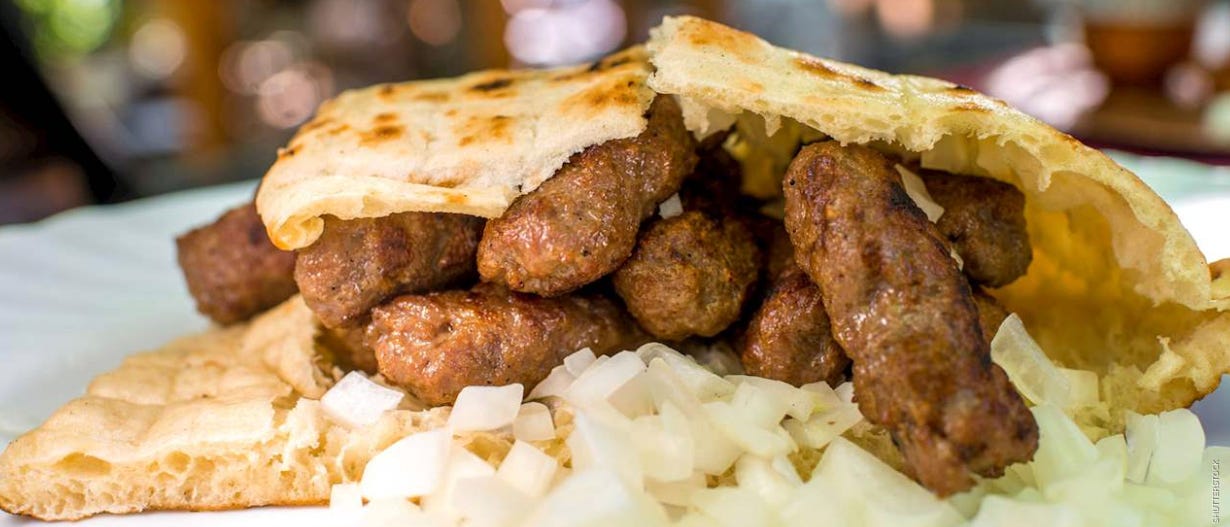
If you’ve ever had ćevapi in Sarajevo, Banja Luka, Travnik or anywhere in between (think Zenica), the bread they arrive in/with will almost certainly be a traditional lepinja.
Soft but sturdy, with enough density to soak up all those meat juices without turning soggy.
This version is flatter, thicker than pita, and slightly chewy.
When grilled briefly over charcoal, it develops that smoky taste that makes the whole experience unmistakably Bosnian. It’s the kind of bread that doesn’t shout for attention, but without it the whole meal would fall apart.
Literally.
Balloon lepinje
The balloon version is the more dramatic cousin. Lighter, and puffier.
It balloons because of the intense heat. The outside seals instantly, trapping steam inside, and up it goes like a miniature hot-air balloon.
Pull one apart and you’ll find a hollow centre, perfect for stuffing with grilled meat, kajmak, roasted veg, or honestly just a bit of butter.
These are closer to the thickness of a Middle Eastern pita, which is why that reader’s question made complete sense.
But balloon lepinje have their own Bosnian personality. Rustic, Proud, and yet a little bit Magical.
Regional quirks (and family traditions)
Like so many foods in Bosnia, lepinja isn’t one rigid thing.
In Herzegovina you may find a slightly different texture.
in Sarajevo another style again.
In the Krajina yet another approach.
Some families add a touch of milk. Some brush the top with oil. Some swear by a long fermentation, others by a quick rise because nobody’s got time for anything else when there’s a hungry family waiting.
If you ask ten Bosnians about the “right” lepinja, you’ll get twelve opinions.
And, do you know what? They’ll all be correct.
Why it matters
Bread here is never just bread. It’s welcome. It’s memory. It’s a link between generations.
When Tamara pulled those balloon lepinje out of the oven, the whole kitchen felt different.
Warm, a bit theatrical, full of that unmistakable Bosnia and Herzegovina charm that still catches me off guard after these twenty-plus years.
So whether you prefer the thicker, sturdier style, or the airy dome that puffs up like a Bosnian hot-air balloon, both versions have their place. Both tell a story. And both taste even better when shared.
☕ Final Sips
Have you ever made lepinje at home?
Until next time, thanks for reading, and as always, thanks for sharing this moment from the Balkans with me.


When I visited Bosnia for the first time in 2018, I was introduced to Lepinja and became an instant fan. I love the texture and the lightness of Lepinja. There isn't anything that compares to it in the US.
Hoping Tamara will share the recipe….I can almost smell them cooking now!!