

Šerif Bajram Mubarak Olsen
Bajram Lunch at Tamara’s Aunt’s House

Hello, I’m David, a storyteller, wanderer, and long-time “in-betweener” living a slower, more thoughtful life here in the heart of the Balkans.
Free subscribers can enjoy regular posts about life in Bosnia and Herzegovina, slices of local culture, stories that I come across, and the little everyday moments that make this place so special.
Curious to go deeper? Paid members get access to everything I create, including exclusive podcasts, behind-the-scenes reflections, photo essays, and more that I only share with my inner circle.
Fancy joining me? Click subscribe and let’s explore this unique corner of the world together, one Coffee and Rakija at a time. ☕✨
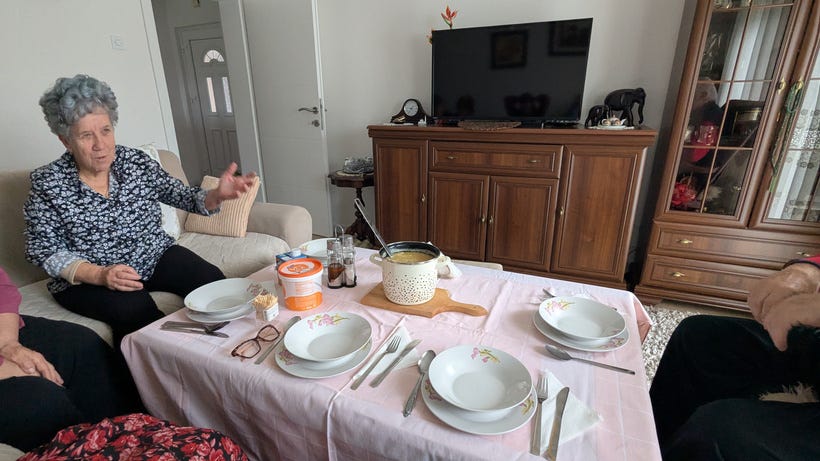
Today we went for Bajram lunch at Tamara’s aunt’s house.
I’ve learned over the years living here in Bosnia and Herzegovina that food is never just food. It’s family, stories, tradition, and time spent together around a table that always seems too small for everything that appears on it.
Really
Everything we ate today was made at home by Tetka Zifa (Aunt Zifa).Aunt Zifa
Nothing came “ready made”.
And the meal just kept coming.
We started with Begova Čorba, often translated as Bey’s soup.
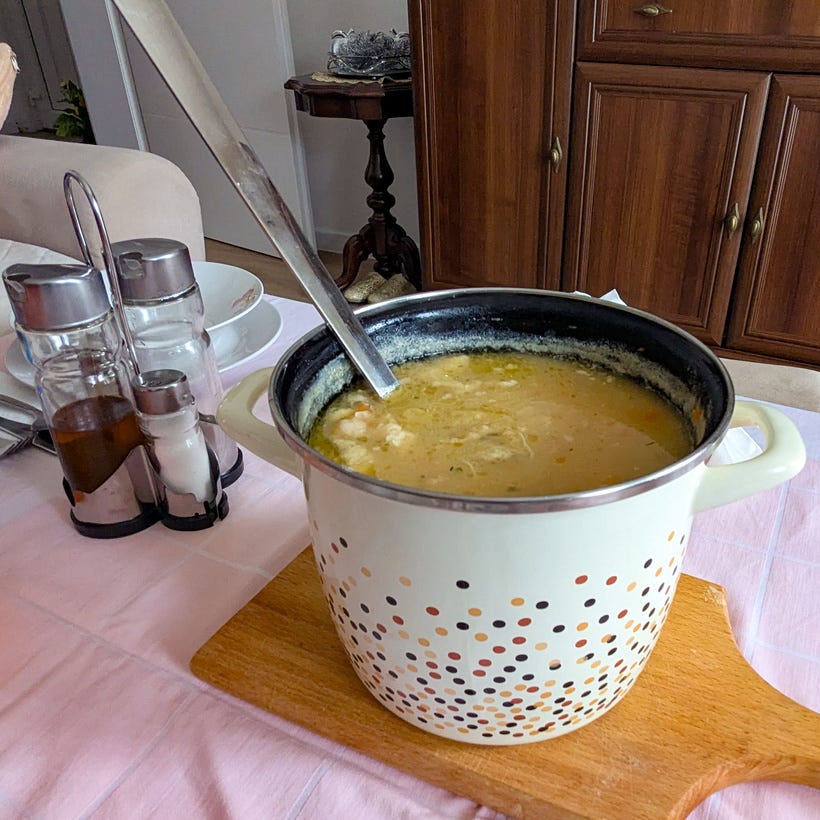
It’s a thick, rich soup made with chicken, vegetables, and okra, finished with a creamy egg and sour cream mixture.
It’s one of the most traditional Bosnian dishes and you’ll often see it at celebrations, weddings, and holidays like Bajram.
It’s not really a starter in the light sense, it’s almost a meal on its own.
Then came Bamija, okra cooked slowly with beef, in a rich sauce.
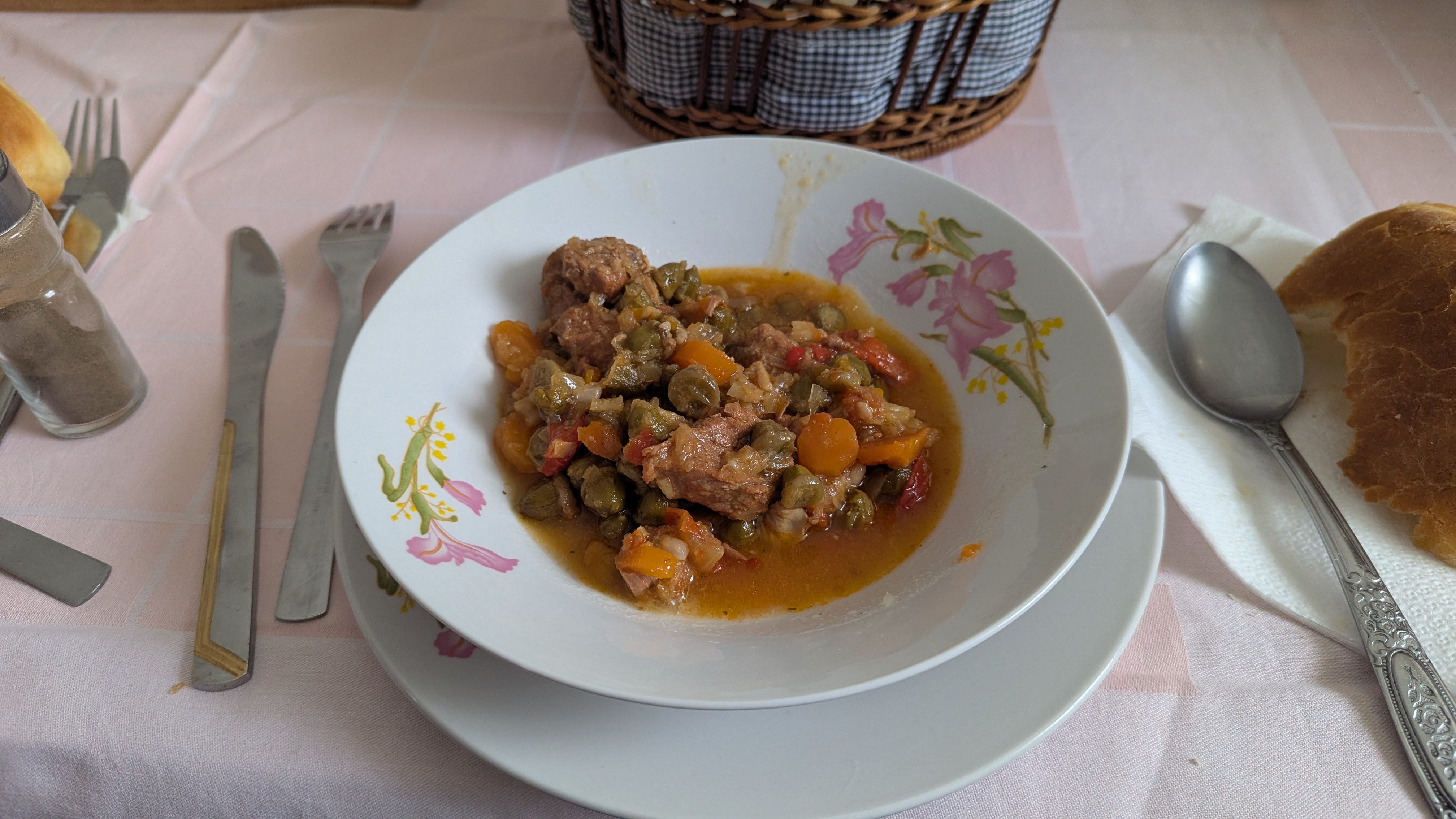
Okra is one of those things you don’t see much in the UK, but here it’s very traditional, especially in older Bosnian cooking. It’s one of those dishes that tastes even better than it looks.
Followed by Sogan Dolma.
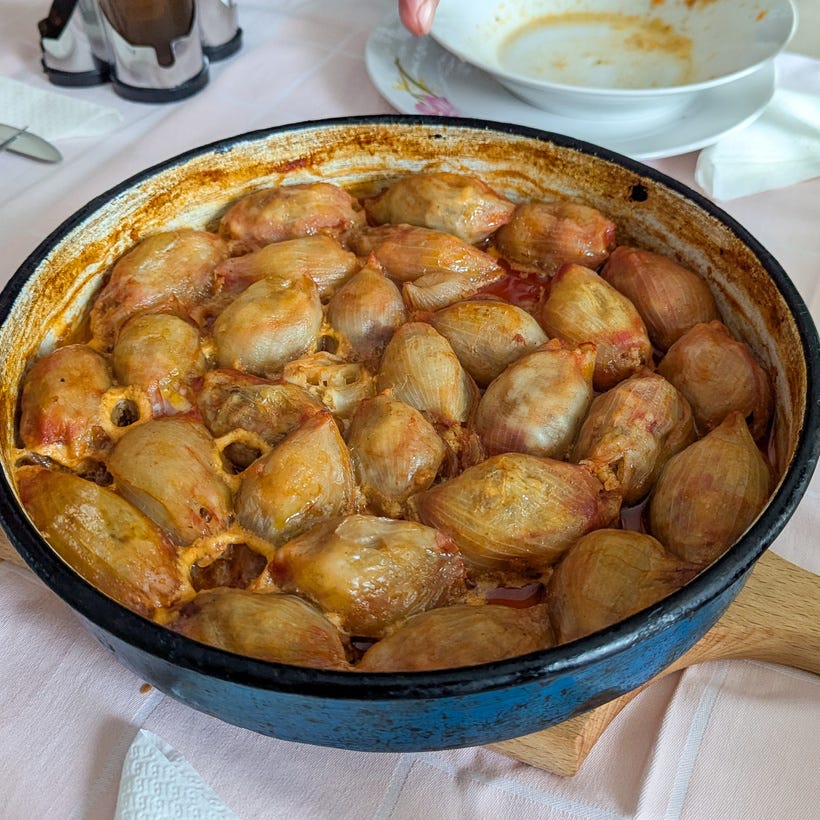
Sogan Dolma is one of the most incredible traditional Bosnian dishes and something that takes a lot of time to make.
Sogan dolma is onions that are hollowed out, layer by layer, and then stuffed with minced meat, rice, and spices, then slowly cooked in a rich sauce. Preparing it takes patience because each onion has to be softened, the layers separated, filled individually, and then carefully packed into a pot to cook slowly for a long time.
After that we had Hajdučki Ćevap.
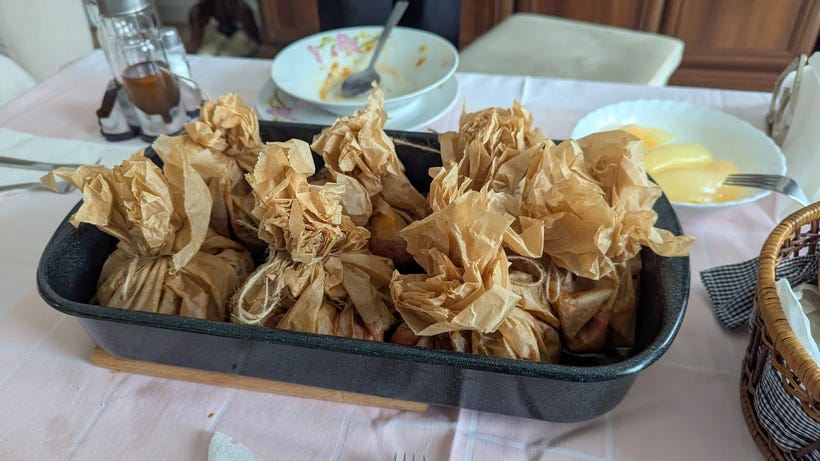
This isn’t the small grilled ćevapi you get in somun bread in Banja Luka or Sarajevo. Hajdučki ćevap is more of a baked meat dish, pieces of meat cooked slowly with onions, peppers, and sometimes mushrooms in a covered dish (or a wrap), so everything becomes soft and full of flavour. Proper home cooking.
Of course, no Bosnian family meal would be complete without Burek (meat pie made with filo pastry)
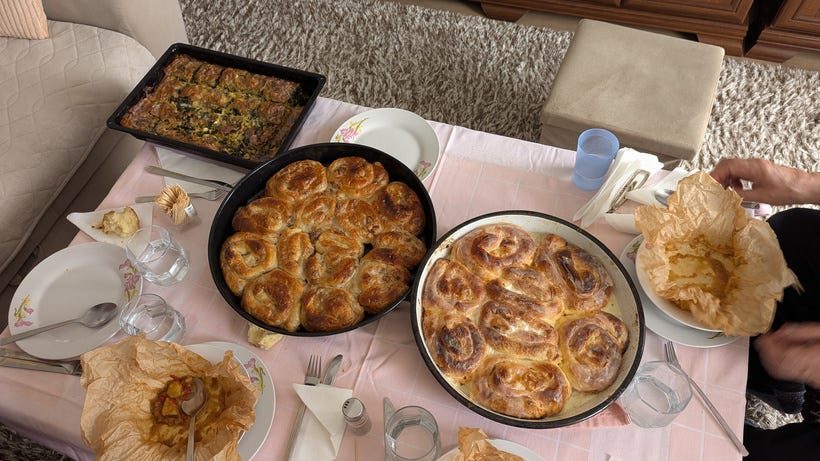
and Sirnica (the cheese version). These appeared as if by magic, and even though everyone said “just a little,” plates somehow kept filling up again.
And then, just when you think you cannot possibly eat another thing, the desserts arrive.
Baklava, sweet, sticky, layered pastry with walnuts and syrup
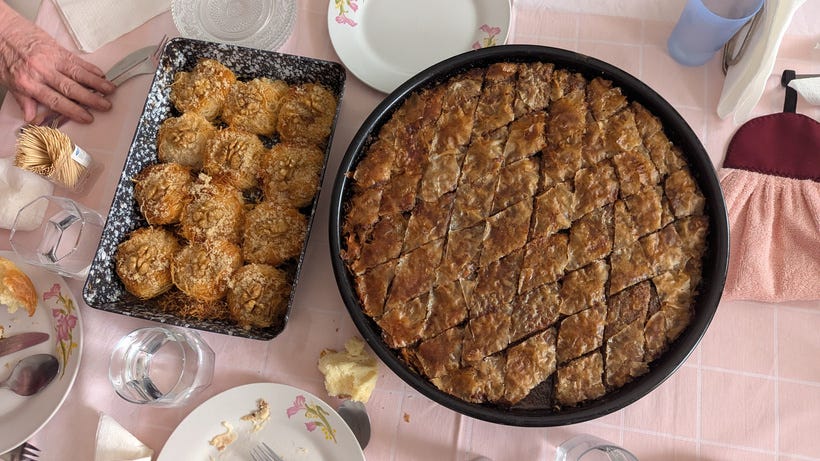
and kadaif, which is made with very fine shredded pastry, also soaked in syrup and usually filled with nuts. Very sweet, very traditional, and very Bajram.
But the truth is, the food is only part of it.
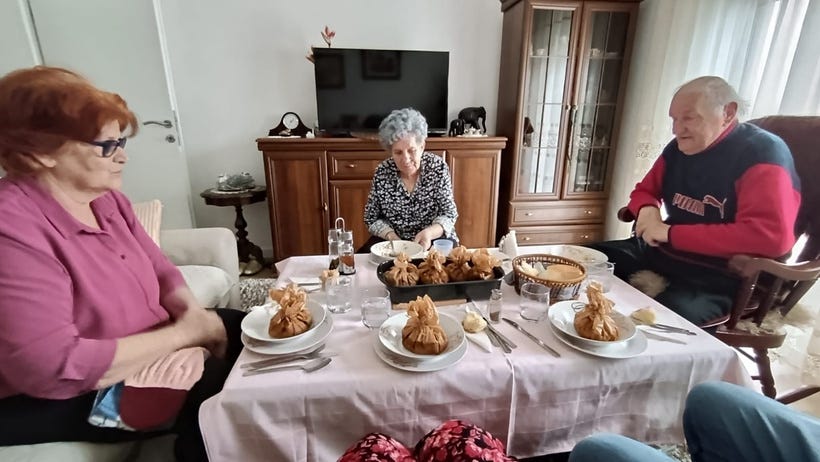
The real Bajram lunch is about sitting for hours, talking, listening to family stories, remembering people who are no longer with us, and laughing about things that happened 30 or 40 years ago as if they were yesterday.
These are the moments when I realise that living here in Bosnia was one of the best decisions I ever made.
Not because of spectacular places or dramatic landscapes, but because of days like today, sitting around a table, being treated like family, and being told for the tenth time to “eat, eat.”
And I’m very glad I did.
“Šerif Bajram Mubarek Olsun”.
Until next time, thanks for reading, and as always, thanks for sharing this moment from the Balkans with me.


